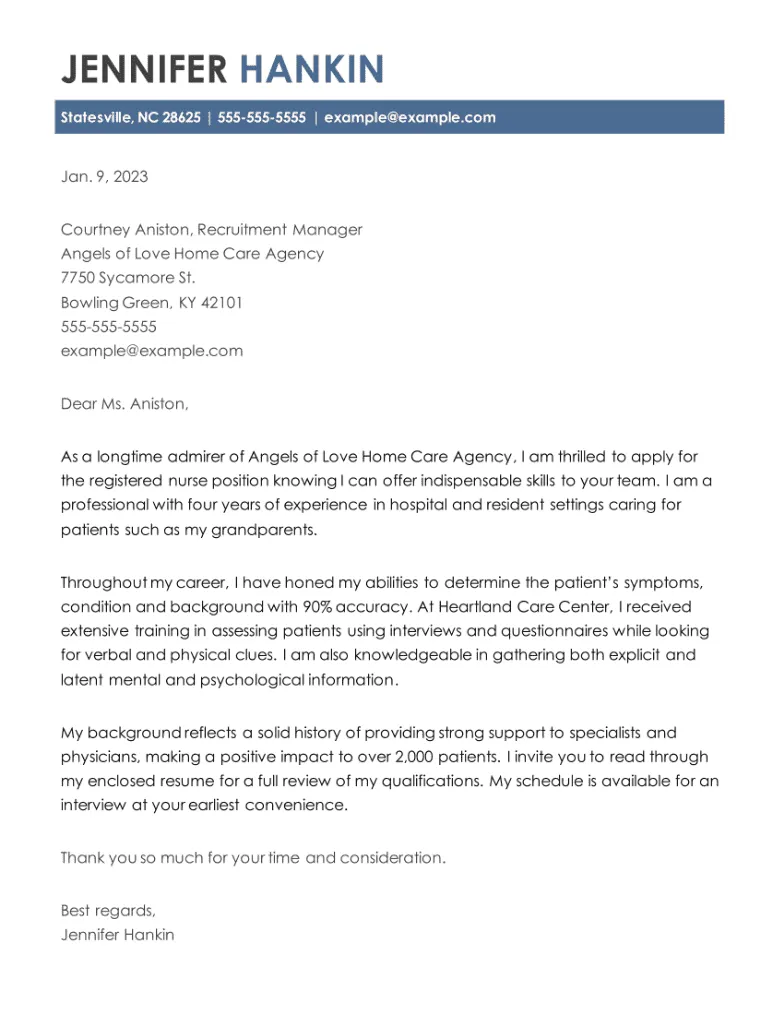
Cover Letter & Resume What Makes Them Important
In the competitive field of nursing, a well-crafted cover letter and resume are crucial tools in your job search arsenal. These documents serve as your first impression, showcasing your skills, experience, and qualifications to potential employers. They are not just a formality; they are your personal marketing tools that can make or break your chances of landing an interview. A strong cover letter and resume can highlight your unique value proposition, setting you apart from other applicants and demonstrating your suitability for the role. By investing time and effort in these documents, you increase your probability of securing a coveted nursing position.
The Purpose of a Cover Letter
A cover letter acts as your introduction, a chance to tell your story in a way a resume cannot. Its primary purpose is to express your interest in a specific position or organization, and to demonstrate how your skills and experiences align with their needs. Unlike a resume, which is a factual list, a cover letter allows you to elaborate on your qualifications, explain any gaps in your employment history, and articulate your career goals. It’s your opportunity to showcase your personality, enthusiasm, and genuine interest in the role. The most effective cover letters are personalized, clearly articulate your understanding of the employer’s needs, and emphasize your suitability for the position.
Highlighting Your Skills

When crafting your cover letter, focus on highlighting the skills that are most relevant to the nursing position you’re applying for. Start by carefully reviewing the job description to identify the key skills and qualifications the employer is seeking. Then, use your cover letter to provide concrete examples of how you’ve demonstrated those skills in previous roles or experiences. This is your opportunity to showcase your proficiency in patient care, clinical skills, communication, critical thinking, and any other relevant competencies. Using specific examples and quantifiable achievements will make your claims more credible and impactful.
Cover Letter Formatting
Formatting your cover letter correctly is just as important as the content. Ensure your cover letter is properly formatted, easy to read, and visually appealing. Use a professional font like Times New Roman or Arial, with a font size between 10 and 12 points. Maintain consistent spacing and margins throughout the document. Start with a professional heading that includes your contact information, the date, and the employer’s information. Use clear and concise language, and break up long paragraphs into shorter, more manageable chunks. Finally, always proofread your cover letter carefully for any grammatical errors or typos, as these can detract from your professionalism.
Key Elements to Include in Your Cover Letter
Your cover letter should include a strong opening paragraph that grabs the reader’s attention and clearly states the position you’re applying for. In the body paragraphs, highlight your most relevant skills and experiences, providing specific examples of your accomplishments. Quantify your achievements whenever possible; for example, ‘Managed a team of 10 nurses, resulting in a 15% improvement in patient satisfaction scores.’ Demonstrate your knowledge of the organization and express your enthusiasm for the opportunity. Close with a call to action, reiterating your interest and stating your availability for an interview. Always tailor your cover letter to each job application, showing you’ve taken the time to understand the role and the employer’s needs.
Resume Essentials for Nurses

Your resume should be a concise and compelling summary of your qualifications. Begin with a clear and professional heading that includes your contact information. Next, include a concise professional summary or objective statement that highlights your career goals and key skills. List your work experience in reverse chronological order, starting with your most recent position. For each role, include the job title, the name of the employer, the dates of employment, and a bulleted list of your responsibilities and achievements. Be sure to include your educational background, including your nursing degree, certifications, and licenses. Also, list any relevant skills, such as specific medical procedures, software proficiency, or language skills.
Formatting Your Resume for ATS Systems
Many employers use Applicant Tracking Systems (ATS) to screen resumes, so it is crucial to format your resume in a way that these systems can read. Use a simple, clean format, avoiding tables, graphics, and complex formatting. Use clear, standard fonts and avoid using headers and footers for essential information like your name or contact details. Save your resume as a .doc or .pdf file to ensure compatibility. Include relevant keywords from the job description throughout your resume, as ATS systems often scan for these terms. Regularly update your resume to ensure it contains the most relevant information, including certifications, skills, and experience that align with your target nursing roles.
Showcasing Your Experience
When describing your work experience, focus on your accomplishments rather than just listing your duties. Use action verbs to start each bullet point, such as ‘managed,’ ‘implemented,’ ‘coordinated,’ or ’trained.’ Quantify your achievements whenever possible; for example, ‘Reduced patient falls by 20% through implementation of a new fall prevention program.’ Highlight your key responsibilities and any special projects or initiatives you were involved in. Tailor your resume to each job application, emphasizing the experiences and skills that are most relevant to the specific position. Make sure your experience demonstrates your ability to handle responsibilities in diverse clinical settings.
Tips to Make Your Application Stand Out

To make your application stand out from the competition, personalize your cover letter and resume to each job. Research the employer and tailor your documents to match their specific needs and values. Highlight any specialized skills or certifications that are relevant to the position. Include a portfolio or examples of your work if applicable. Seek feedback from trusted sources, such as career counselors or nursing colleagues, to improve your application. Consider adding a professional headshot to your resume to make a more personal connection. Always follow up on your application to express your continued interest in the role.
Tailoring Your Documents
Customizing your cover letter and resume for each job application is crucial. Start by carefully reviewing the job description to identify the key requirements and qualifications. Then, use your cover letter to explain how your skills and experiences align with those requirements. Highlight the most relevant achievements in your resume, using keywords from the job description. When writing your cover letter, address the hiring manager by name whenever possible, showing that you have done your research. Tailoring your application demonstrates your genuine interest in the role and increases your chances of getting an interview.
Proofreading and Editing
Before submitting your cover letter and resume, proofread them carefully for any errors in grammar, spelling, or punctuation. Errors can detract from your professionalism and create a negative impression. Use spell-check and grammar-check tools, but also read your documents aloud to catch any mistakes that those tools might miss. Ask a friend, family member, or career counselor to review your application for clarity, accuracy, and overall impact. Pay close attention to details like formatting, spacing, and consistency throughout your documents. A polished and error-free cover letter and resume will greatly enhance your chances of success.
Using Action Verbs

Using strong action verbs is a great way to make your resume and cover letter more engaging and impactful. Action verbs describe what you did in your previous roles, making your accomplishments more vivid and easier for the hiring manager to understand. Start each bullet point in your resume with a strong action verb, such as ‘managed,’ ’led,’ ‘developed,’ ‘implemented,’ ‘coordinated,’ or ’trained.’ These verbs add energy and direction to your descriptions, highlighting your skills and achievements effectively. Choose verbs that are specific to your experience and the requirements of the job you’re applying for.
Contact Information and Follow-up
Ensure your contact information is prominently displayed on both your cover letter and resume. Include your full name, phone number, email address, and any professional links, such as a LinkedIn profile. Double-check that your contact information is accurate and up to date. After submitting your application, follow up with the hiring manager or recruiter to express your continued interest in the role. A polite follow-up email or phone call can demonstrate your enthusiasm and commitment. Be sure to mention the specific position and reiterate your qualifications. This can leave a positive impression and potentially increase your chances of getting an interview.