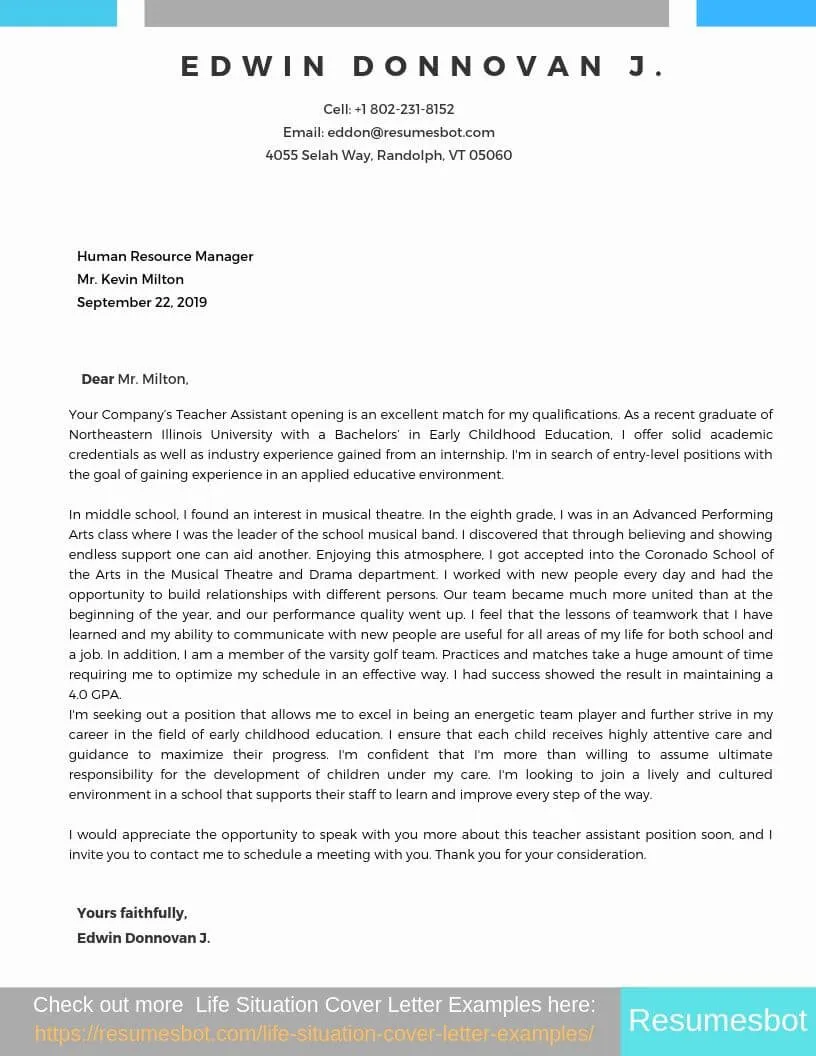
Understanding the Importance of a Teacher Cover Letter
A well-crafted teacher cover letter is your first opportunity to make a strong impression on potential employers. Even with no prior teaching experience, a compelling cover letter can showcase your enthusiasm, skills, and suitability for the role. This document serves as a crucial introduction, allowing you to highlight your qualifications and personality in a way that a resume alone cannot. It’s your chance to tell your story and explain why you’re the ideal candidate, even without direct classroom experience. The cover letter should be personalized to the specific school and position, demonstrating your genuine interest and research into their values and needs. A generic cover letter will not make a lasting impression, so invest time in crafting a unique and persuasive one that reflects your passion for teaching. This is your chance to stand out from the crowd and get your foot in the door. Therefore, consider the cover letter as your personal introduction to the hiring manager.
Crafting a Compelling Cover Letter with No Experience
When you have no teaching experience, the focus of your cover letter shifts to highlighting transferable skills, relevant experiences, and your potential. Begin by clearly stating the position you’re applying for and where you saw the job posting. Emphasize any experiences, such as volunteer work, tutoring, or mentoring, that demonstrate your ability to work with children or young adults. Detail your understanding of child development, educational methodologies, and classroom management techniques you’ve acquired through coursework or observations. Showcase any skills you have developed through your education or other experiences that are relevant to teaching, such as communication, organization, and leadership. Use action verbs to describe your accomplishments and quantify your achievements whenever possible. This will demonstrate your capabilities and the impact you’ve had. Remember, the goal is to convince the hiring manager that, despite the lack of experience, you possess the qualities and potential to be a successful teacher. Make sure to let your passion for teaching shine through.
Highlighting Relevant Skills and Experiences

Even without direct teaching experience, you likely possess a wealth of skills and experiences that are directly transferable to the classroom. Think about the skills you have developed through your education, volunteer work, part-time jobs, or extracurricular activities. These might include communication, interpersonal skills, organization, time management, leadership, and problem-solving. If you’ve tutored, mentored, or volunteered with children, be sure to detail those experiences, highlighting your responsibilities and achievements. Explain how these experiences have prepared you for the role of a teacher, emphasizing your ability to build rapport with students, create engaging lessons, and manage a classroom environment. If you have a strong academic record, mention your GPA or any relevant coursework you have completed, showcasing your dedication to learning and your understanding of educational concepts. Even if your experience isn’t directly related to teaching, highlight any skills or achievements that demonstrate your ability to work effectively with others, manage projects, or motivate individuals. Tailor your skills and experiences to fit the specific requirements of the job description.
Showcasing Your Passion for Teaching
Your cover letter is your opportunity to convey your passion for teaching and your genuine enthusiasm for working with children. The hiring manager wants to hire someone who is motivated and excited about the teaching profession. Express your commitment to education, your belief in the power of learning, and your understanding of the impact teachers have on students’ lives. Share your personal reasons for wanting to be a teacher, which can be very effective, but keep the tone professional. Describe your teaching philosophy, what motivates you, and how you plan to inspire and engage students. Mention specific strategies or approaches you would use in the classroom, such as incorporating technology, promoting critical thinking, or creating a positive learning environment. Tailor your passion to the specific school’s mission and values, demonstrating your understanding of their educational approach and your alignment with their goals. Let your personality shine through, showing the hiring manager that you are not only qualified but also a good fit for the school’s culture. Your passion will often be what sets you apart from the other applicants.
Formatting and Structure for Your Cover Letter
A well-structured cover letter is easy to read and allows the hiring manager to quickly grasp your qualifications and enthusiasm. Start with your contact information at the top, followed by the date and the recipient’s information. Address the letter to the hiring manager by name, if possible, to show you’ve done your research. Begin with a strong opening paragraph that grabs the reader’s attention and clearly states the position you’re applying for. The body of the letter should consist of two to three paragraphs. In the first paragraph, briefly summarize your qualifications and skills. In the second or third paragraph, provide specific examples of your experiences and accomplishments that demonstrate your suitability for the role. Close with a call to action, expressing your interest in an interview and thanking the hiring manager for their time and consideration. Use a professional font, such as Times New Roman, Arial, or Calibri, and maintain a consistent font size (11 or 12 points). Keep the letter concise, ideally no longer than one page. Proofread carefully for any grammatical errors or typos before submitting your application. Ensure the formatting is consistent and easy to follow, demonstrating your attention to detail.
Reviewing Cover Letter Samples for Inspiration

Studying cover letter samples can provide valuable inspiration and guidance when crafting your own. Look for examples that are tailored to teachers with no experience. Pay attention to the language, structure, and tone used in successful cover letters. Analyze how these samples highlight relevant skills, experiences, and achievements. Note how the writers showcase their passion for teaching and express their enthusiasm. While you shouldn’t copy a cover letter word-for-word, use these samples as a template to guide your own writing process. Look for examples that use a variety of strategies to make a good impression, such as highlighting transferable skills, quantifying achievements, and expressing a commitment to education. Use the samples to generate ideas and brainstorm ways to present your own qualifications. Remember to personalize your cover letter to the specific job and school. Modify the sample to reflect your unique experiences, skills, and teaching philosophy. Before submitting your letter, review the sample again to ensure your letter conveys the right tone and impression.
Addressing Common Challenges in Teacher Cover Letters
Writing a cover letter with no experience comes with certain challenges. One of the main challenges is the lack of direct teaching experience, so you must focus on highlighting transferable skills and demonstrating your potential. Address this challenge by showcasing skills acquired from other experiences, emphasizing your passion for teaching, and explaining your teaching philosophy. Another challenge is the competition from experienced teachers. To overcome this, differentiate yourself by emphasizing your unique strengths, tailoring your letter to the specific school, and expressing your enthusiasm. Clearly articulate your commitment to continuous learning and professional development. Address potential concerns about your lack of experience by proactively mentioning relevant skills and knowledge. Use the letter to show the school your understanding of classroom management and educational methodologies. Acknowledge your lack of experience, but then quickly pivot to what you can offer, showcasing your passion and your willingness to learn. Make sure the letter reflects your personality and gives the hiring manager a good sense of who you are and what you stand for.
Common Mistakes to Avoid in Your Cover Letter
Certain mistakes can weaken your cover letter and diminish your chances of landing an interview. Avoid generic language and clichés; instead, use specific examples and tailor your letter to the school’s needs. Do not repeat information from your resume verbatim; instead, use your cover letter to elaborate on specific experiences. Avoid typos and grammatical errors; always proofread carefully before submitting. Do not be overly informal or use slang. The tone should be professional and enthusiastic. Avoid being negative or complaining about a lack of experience; instead, focus on your strengths and potential. Avoid mentioning salary expectations or other logistical issues in the cover letter. Do not provide negative information or reasons why you should not be hired. Avoid using a cover letter template that doesn’t fit the specific job requirements. Don’t make the letter too long or too short; aim for a concise and engaging one-page document. Always be honest and authentic, letting your personality shine through.