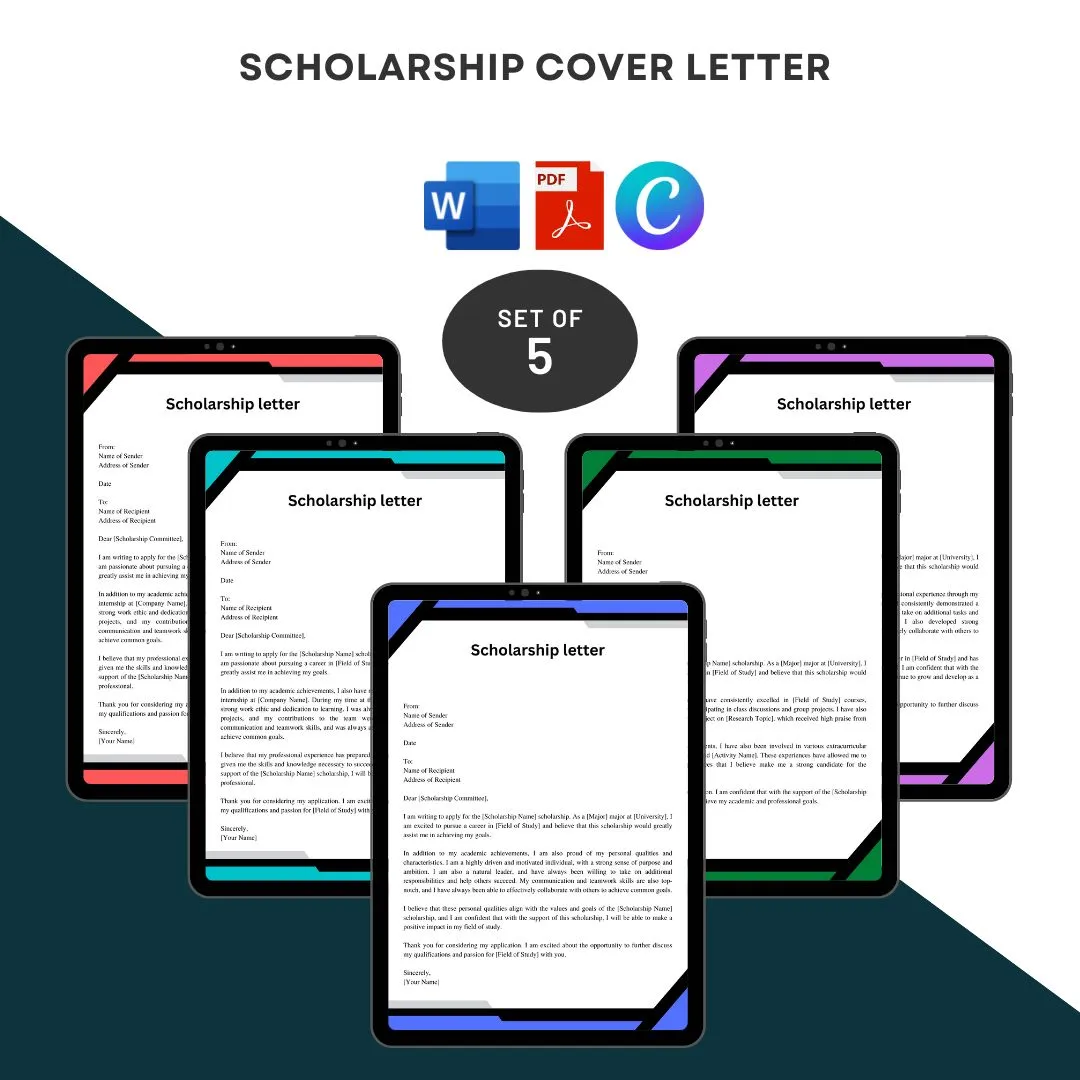
What is a Scholarship Cover Letter?
A scholarship cover letter is a crucial document that accompanies your scholarship application. It serves as your introduction to the scholarship committee, providing a concise overview of your qualifications, aspirations, and why you deserve the scholarship. Unlike a resume, which lists your achievements, the cover letter allows you to weave a narrative, showcasing your personality, passion, and how the scholarship will help you achieve your goals. It is your chance to make a strong first impression and persuade the selection committee to consider your application favorably. A well-written cover letter is a key differentiator in a competitive field.
Why Is a Scholarship Cover Letter Important?
The scholarship cover letter is incredibly important because it provides context to your application. It gives the selection committee a glimpse into who you are beyond your grades and extracurricular activities. It allows you to explain your motivations, share your story, and highlight what makes you unique. Many applicants have similar qualifications, so the cover letter is your chance to stand out. By articulating your goals, demonstrating your passion for your field of study, and explaining how the scholarship will help you, you can significantly increase your chances of success. This document proves you’re serious about the opportunity.
Key Elements of a Strong Cover Letter

Several key elements are essential for a strong scholarship cover letter. First, clearly state the scholarship you are applying for. Second, address the specific requirements and criteria mentioned in the scholarship guidelines. Third, highlight your relevant achievements, skills, and experiences. Fourth, express your financial need, if applicable and if the scholarship considers it. Finally, demonstrate your passion for your field of study and how the scholarship will support your educational and career goals. Each section must be tailored to the specific scholarship. The cover letter should be well-organized, concise, and free of grammatical errors.
Formatting Your Cover Letter
Proper formatting is vital for a professional and readable cover letter. Use a standard business letter format with clear margins and a readable font like Times New Roman or Arial, size 11 or 12. Keep the letter concise, ideally within one page. Break up the text with paragraphs and use headings to guide the reader. Proofread carefully to avoid any typos or grammatical errors. Consistency in formatting demonstrates attention to detail and respect for the scholarship committee’s time. Ensure the layout is visually appealing and easy to navigate.
Heading and Contact Information
Begin with your contact information in the heading. Include your full name, address, phone number, and email address. On the same line or slightly below, include the date and the scholarship committee’s name, if known, and the address of the scholarship provider. This professional format helps the committee easily identify and contact you. Ensure your contact information is accurate and up-to-date.
Greeting the Selection Committee

Address the selection committee professionally. If you know the name of the committee chair or a specific person, use it, such as “Dear Mr. Smith.” If not, use a general greeting like “Dear Scholarship Committee” or “To Whom It May Concern.” Avoid overly informal greetings. A proper greeting sets a respectful tone for the letter and demonstrates that you have taken the time to research the scholarship and its providers.
Body Paragraphs
The body paragraphs are the core of your cover letter. These paragraphs should be clear, concise, and compelling, focusing on your qualifications, goals, and why you deserve the scholarship. Each paragraph should address a specific aspect of your application, such as your achievements, financial need, or aspirations. The language should be professional and avoid overly emotional statements. Use the body paragraphs to create a narrative that showcases your personality and how the scholarship aligns with your goals.
Opening Paragraph (Grab Attention)
The opening paragraph is your first chance to capture the reader’s attention. Start with a compelling statement that clearly states the scholarship you’re applying for and why you’re a good fit. Briefly introduce yourself and your field of study. Highlight a key achievement or experience that directly relates to the scholarship criteria. This paragraph should make the committee want to read more. Make sure to show your enthusiasm and highlight your personal connection to the scholarship’s goals or mission.
Highlight Your Achievements (Showcase Strengths)

In the subsequent paragraphs, detail your achievements, skills, and experiences that are relevant to the scholarship’s requirements. Provide specific examples and quantify your accomplishments whenever possible. For example, instead of saying “I was involved in several clubs,” state “I was the president of the debate club, where we increased membership by 20%.” Connect your achievements to the scholarship’s objectives and demonstrate how they have prepared you for success in your field of study. Show, don’t just tell – back up your claims with evidence.
Express Your Financial Need (If Applicable)
If the scholarship considers financial need, address it honestly and respectfully. Briefly explain your financial situation and how the scholarship will help you pursue your education. Avoid excessive detail; focus on the impact of the scholarship. If the scholarship doesn’t mention financial need, you can still subtly hint at your challenges without going into specifics. Emphasize your determination to succeed despite any obstacles.
Discuss Your Goals and Aspirations
Conclude your body paragraphs by discussing your academic and career goals. Explain how the scholarship will help you achieve these goals and what you plan to contribute to your field of study. Show the committee that you have a clear vision for your future and that you are dedicated to achieving it. Connect your aspirations to the scholarship’s mission and values to demonstrate your commitment. Be specific about your long-term objectives.
Closing Paragraph (Call to Action)

In your closing paragraph, reiterate your interest in the scholarship and thank the committee for their time and consideration. Express your confidence that you are a strong candidate and state that you look forward to hearing from them. End with a professional closing, such as “Sincerely” or “Respectfully,” followed by your full name. Proofread the entire letter one last time before submitting it.
Proofreading and Editing
Proofreading and editing are essential steps in writing a winning scholarship cover letter. Carefully review your letter for any grammatical errors, spelling mistakes, or typos. Read the letter aloud to catch awkward phrasing or sentences. Ask a friend, teacher, or career counselor to review your letter for feedback. A polished cover letter shows that you pay attention to detail and are committed to presenting yourself in the best possible light. Poor grammar can undermine your credibility and damage your chances of success.
Common Mistakes to Avoid
Several common mistakes can significantly weaken your scholarship cover letter. Avoid generic letters that could apply to any scholarship. Do not exceed the length requirements. Do not use slang or overly casual language. Avoid exaggerating your achievements or providing false information. Ensure that your letter aligns with the specific scholarship’s requirements. Failing to follow instructions is a major mistake. Instead of copying and pasting from a template, tailor your letter to demonstrate your unique qualities and alignment with the scholarship’s goals. Always proofread carefully before submitting your application.