Crafting a Law Cover Letter That Stands Out
In the competitive world of law, a compelling cover letter is your first opportunity to make a lasting impression. It’s more than just a formality; it’s your chance to showcase your personality, passion, and potential to a prospective employer. A well-crafted law cover letter highlights your unique qualifications, legal skills, and enthusiasm for the specific role or firm. By understanding the nuances of writing a standout cover letter, you significantly increase your chances of securing an interview and ultimately, landing your dream legal job. This guide will walk you through the essential elements of writing a law cover letter, providing practical tips and strategies to help you get noticed and excel in your job search.
Understanding the Purpose of a Law Cover Letter
The primary purpose of a law cover letter is to introduce yourself and your qualifications to a potential employer. Unlike a resume, which provides a factual overview of your experience and skills, a cover letter allows you to tell your story and express your personality. It provides context to your resume, explaining why you’re interested in the specific position or firm, and what you can bring to the table. A cover letter should be used to demonstrate your genuine interest, tailor your qualifications to the job requirements, and highlight your unique skills and experiences that make you a strong candidate. A successful law cover letter convinces the reader to delve deeper into your application.
Highlighting Your Relevant Experience

When highlighting your relevant experience, focus on the skills and accomplishments that align with the job description. Don’t simply list your previous roles; instead, demonstrate how your experiences have equipped you with the skills required for the position. Quantify your achievements whenever possible. For example, if you worked on a case that resulted in a favorable outcome, mention it. This provides concrete evidence of your ability to succeed. Emphasize your experience in areas that are relevant to the law firm’s practice areas or the specific role. Make sure your skills are relevant to law. This targeted approach will make your cover letter more impactful and demonstrate a clear understanding of the employer’s needs.
Researching the Law Firm or Organization
Thoroughly research the law firm or organization before writing your cover letter. Visit their website, read recent news articles, and explore their social media profiles. Understanding their values, mission, and recent activities will allow you to tailor your letter to their specific needs. Identify their current cases, areas of expertise, and any recent achievements or awards. This research will help you demonstrate your genuine interest and enable you to highlight how your skills and experiences align with the firm’s goals. It also provides valuable insights that you can weave into your cover letter to show you’ve put in the effort to learn about them.
Tailoring Your Cover Letter
Each cover letter should be tailored to the specific job and the organization to which you are applying. Avoid using generic templates. Instead, carefully review the job description and identify the key skills and qualifications they are seeking. Adjust your cover letter to highlight your relevant experiences and skills, emphasizing how they align with the job requirements. Use the firm’s name, and, if possible, address your letter to a specific person within the firm. By customizing your cover letter, you demonstrate your genuine interest in the role and the firm and showcase that you’ve taken the time to understand their needs.
Showcasing Your Legal Skills and Knowledge

A successful law cover letter must showcase your legal skills and knowledge. Highlight your expertise in legal research, writing, analysis, and advocacy. Provide specific examples of how you have applied these skills in previous roles or academic projects. Mention your familiarity with relevant legal software and databases, such as Westlaw or LexisNexis. Demonstrate your understanding of legal concepts, procedures, and ethics. Use legal terminology appropriately and show that you can communicate effectively in a professional legal context. This will prove that you are ready to perform in the legal field. Showcasing your skills establishes you as a competent and well-informed candidate, making a strong case for your capabilities and readiness to contribute.
Emphasizing Key Skills
Focus on the key skills that are most relevant to the job description. Identify the skills that the employer is looking for and demonstrate how you possess them. Highlight your experience in legal writing, research, analysis, and client communication. Provide specific examples of how you have successfully utilized these skills in past projects or roles. Showcase your ability to work independently and as part of a team. Mention any special skills, such as proficiency in a foreign language or expertise in a specific area of law. By focusing on the skills the employer prioritizes, you can create a compelling narrative of your abilities and value.
Demonstrating Your Passion for Law
Express your genuine passion for the law and your specific interest in the firm or role. Explain why you are drawn to this area of law and what motivates you. Share any personal experiences or achievements that have fueled your passion. Mention specific cases or legal issues that have captured your attention and explain why they resonate with you. Highlight what excites you about the firm’s work or its mission. Demonstrate your dedication to the legal profession and show that you are not just looking for a job but are eager to contribute to the practice of law. Showing your passion can make you stand out amongst others.
Structuring Your Law Cover Letter

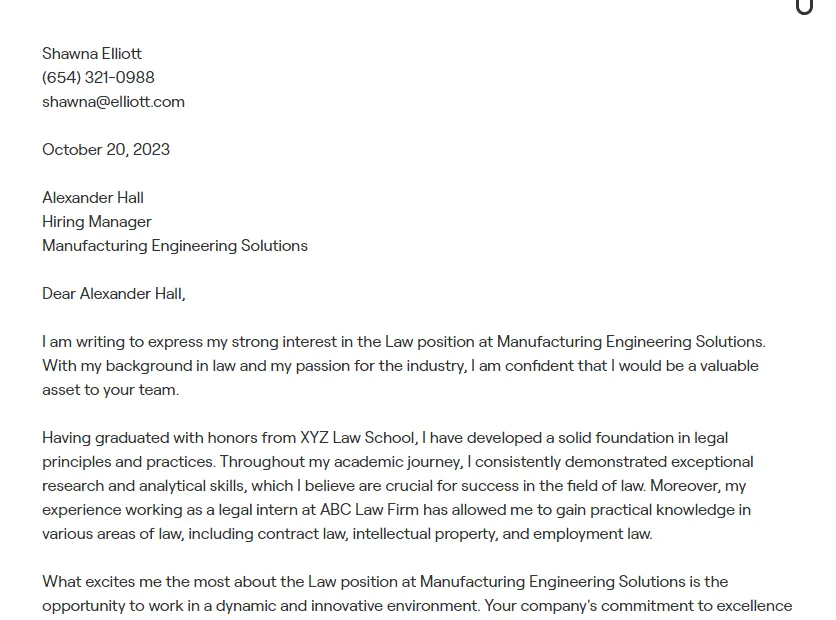
The structure of your law cover letter is as important as its content. A well-organized letter is easy to read and helps convey your message effectively. The standard format includes a header, salutation, body paragraphs, and a closing. Each section should have a clear purpose and contribute to the overall impact of your letter. Ensure your cover letter is structured logically and easy to follow, demonstrating your attention to detail and organizational skills. This will help you to be noticed.
Header and Contact Information
Your header should include your contact information: your name, phone number, email address, and LinkedIn profile (optional). The header should be professional and easy to read. Include the date and the recipient’s name, title, and law firm’s address. Ensure all contact information is accurate and up-to-date. This is the first thing the reader sees, so it’s important to make a good impression. Keep the formatting consistent and professional.
The Salutation
Address the letter to a specific person whenever possible, using their name and title. If you are unsure of the recipient’s name, research the firm’s website or call the office to find out. If you are unable to identify a specific person, use a professional greeting such as “Dear Hiring Manager” or “Dear [Law Firm Name] Hiring Team”. Avoid generic salutations like “To Whom It May Concern”. Make sure the tone of the salutation is appropriate for the firm’s culture.
The Body Paragraphs

The body of your cover letter should consist of a few concise paragraphs. The first paragraph should state the position you are applying for and how you learned about the opportunity. The next paragraph(s) should highlight your relevant experience and skills, providing specific examples and quantifying your achievements whenever possible. Tailor these paragraphs to the specific requirements of the job. Show, don’t just tell, by using strong action verbs and demonstrating how your experiences align with the role’s needs. Use the last body paragraph to express your enthusiasm for the position and the firm, and reiterate your interest in an interview.
The Closing
In your closing paragraph, express your gratitude for the reader’s time and consideration. Reiterate your interest in the position and include a call to action, such as requesting an interview. Use a professional closing, such as “Sincerely” or “Respectfully,” followed by your typed name. Ensure the closing is consistent with the overall tone of the letter. Double-check for any typos or grammatical errors before submitting your letter.
Proofreading and Editing Your Cover Letter
Proofreading and editing are critical steps in the cover letter writing process. Errors can damage your credibility and detract from your qualifications. Always proofread your cover letter multiple times. Check for grammar, spelling, punctuation, and syntax errors. Read your letter aloud to catch any awkward phrasing or mistakes. Ask a friend, mentor, or career counselor to review your cover letter. Consider using grammar and spell-checking software. A polished, error-free cover letter demonstrates professionalism and attention to detail, key attributes in the legal field.
Common Mistakes to Avoid

Avoid common mistakes that can undermine your cover letter. Do not use generic templates without customization. Do not repeat information from your resume verbatim. Avoid grammatical errors, spelling mistakes, and typos. Refrain from using overly casual language or slang. Do not include irrelevant information or personal details. Avoid negative language or criticism of previous employers. Be careful not to make any exaggerated claims. These errors can make your application appear unprofessional and damage your chances of getting hired. By avoiding these pitfalls, you improve the impact of your cover letter and make a better impression on the hiring manager.
Seeking Feedback
Seek feedback from trusted sources before submitting your cover letter. Ask a career counselor, mentor, professor, or experienced legal professional to review your letter. Provide them with the job description and ask them to assess whether your cover letter effectively addresses the requirements and highlights your qualifications. Be open to their suggestions and be willing to revise your letter based on their feedback. Getting a second opinion can help you identify areas for improvement and ensure your cover letter is as strong as possible. This can significantly boost your chances of success. Consider this as a crucial step.
Formatting and Presentation
Pay attention to the formatting and presentation of your cover letter. Use a professional font, such as Times New Roman, Arial, or Calibri, and ensure that the font size is easy to read (typically 11 or 12 points). Maintain consistent formatting throughout the letter. Use clear margins, spacing, and paragraph breaks to make the letter easy to read. Keep the letter concise and limit it to one page. Use a professional and clean layout that enhances readability. A well-formatted cover letter reflects your professionalism and attention to detail. Ensure your presentation makes the best first impression.