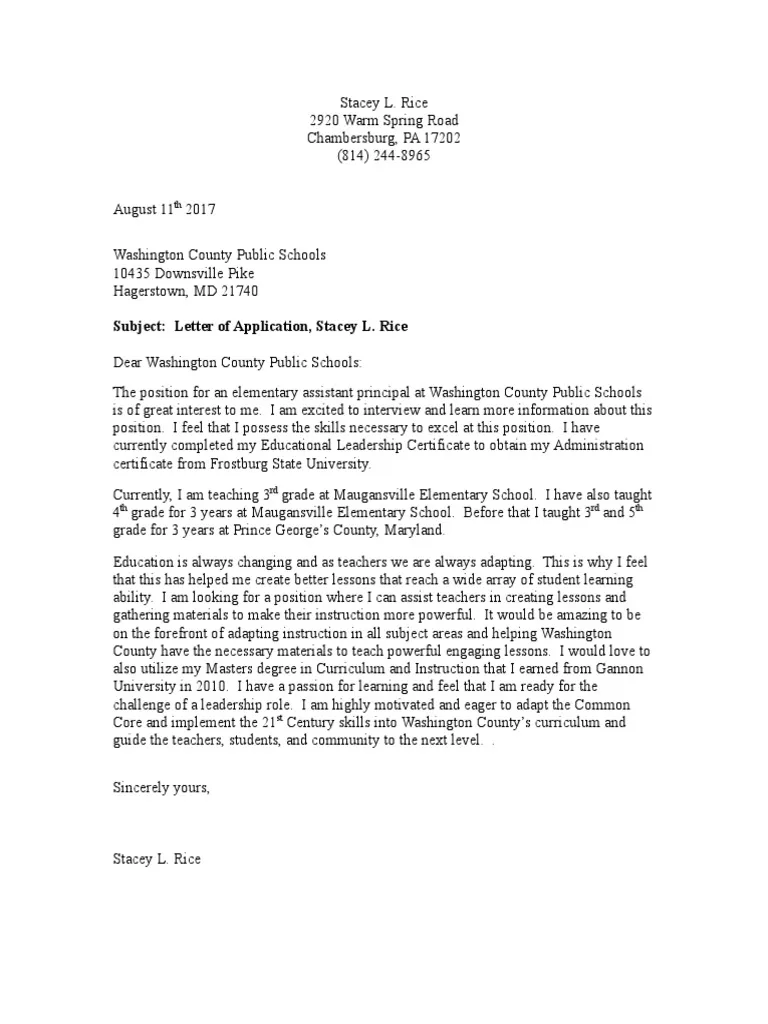
Understanding the Principal Cover Letter
A principal cover letter is a crucial document in your application for a principal position. It serves as your introduction to the hiring committee, providing an opportunity to showcase your qualifications, experience, and passion for education. Unlike a resume, which presents a chronological overview of your career, a cover letter allows you to tell a compelling story about why you are the ideal candidate and how you can contribute to the school’s success. A well-crafted cover letter can significantly increase your chances of securing an interview, making it a vital part of your job application strategy. It also lets you show your enthusiasm for the school’s mission and values.
Purpose and Importance
The primary purpose of a principal cover letter is to persuade the hiring committee that you are the best fit for the role. It allows you to elaborate on your resume, highlight your key accomplishments, and demonstrate your understanding of the school’s needs. The importance of a cover letter lies in its ability to differentiate you from other applicants. A strong cover letter showcases your personality, leadership style, and commitment to educational excellence. It also helps you address any potential concerns the hiring committee might have, such as gaps in your experience or specific skill gaps. A well-written cover letter can be the deciding factor in whether you are invited for an interview.
Key Components

A compelling principal cover letter includes several key components. Start with a professional header containing your contact information and the date. Then, address the letter to the appropriate person, such as the hiring manager or the principal search committee. The body of the letter should be structured in a way that highlights your qualifications and experience, demonstrates your understanding of the school’s needs, and expresses your enthusiasm for the position. Close with a strong call to action, such as requesting an interview. Proofread carefully to ensure there are no grammatical errors or typos.
Formatting Your Principal Cover Letter
Proper formatting is essential for a professional and readable principal cover letter. The format influences the first impression your letter makes. It shows the reader that you pay attention to detail. Maintain a clean and organized layout with consistent formatting. Use a professional font such as Times New Roman, Arial, or Calibri, with a font size of 11 or 12 points. Use single spacing within paragraphs and double spacing between paragraphs. Keep your letter concise, ideally no more than one page. Use headings and bullet points to break up the text and make it easier to read. Ensure your margins are consistent. Consistency will help you create a good first impression. Avoid clutter.
Header and Contact Information
The header of your principal cover letter should include your full name, address, phone number, and email address. This information should be placed at the top of the letter, either on the left or right side. Below your contact information, include the date. Following the date, add the recipient’s information, including the hiring manager’s name, title, the school’s name, and the school’s address. This information demonstrates your attention to detail and professionalism, making it easy for the hiring committee to contact you.
Salutation

The salutation is your opening greeting. Address the letter to the specific hiring manager whenever possible, using their name and title. If you are unable to find the hiring manager’s name, use a professional greeting, such as “Dear Principal Search Committee” or “Dear Hiring Manager.” Avoid generic salutations like “To Whom It May Concern,” as they can make your letter seem impersonal. Ensure the salutation is followed by a colon. Always tailor the salutation to the specific school and position you are applying for.
Body Paragraph 1 Why You Are a Great Fit
The first body paragraph should immediately capture the reader’s attention by stating why you are the best candidate for the principal position. Express your enthusiasm for the school, its mission, and values. Briefly summarize your relevant experience and qualifications, highlighting the skills and accomplishments that align with the school’s needs. Mention what attracted you to the role and the school, demonstrating your understanding of its unique culture. Tailor this paragraph to the specific requirements of the job posting. Demonstrate your alignment with the school’s goals.
Body Paragraph 2 Highlighting Experience
The second paragraph should delve deeper into your relevant experience. Provide specific examples of your accomplishments and how you have demonstrated leadership, management, and instructional expertise. Use the STAR method (Situation, Task, Action, Result) to provide context and showcase your achievements. Quantify your accomplishments whenever possible, using data to demonstrate the impact you’ve made in previous roles. Show how your past experiences will translate to success in this new role, emphasizing skills such as curriculum development, staff management, or community engagement. Focus on the experience that aligns with the school’s needs.
Body Paragraph 3 Showcasing Skills and Achievements

This paragraph focuses on your key skills and achievements, emphasizing how you have used them to achieve success. Highlight specific leadership skills, such as strategic planning, decision-making, and conflict resolution. Showcase your ability to create a positive school culture, improve student outcomes, and foster collaboration among staff, students, and parents. Provide examples of how you have implemented successful initiatives and achieved measurable results. Connect your skills to the needs of the school. Show evidence of your skills and their impact on the school environment.
Body Paragraph 4 Expressing Enthusiasm
Conclude with a paragraph that re-emphasizes your enthusiasm for the position and the school. Express your excitement about the opportunity to contribute to the school’s success. Reiterate your key qualifications and reiterate your interest. Mention any specific aspects of the school or the role that particularly appeal to you. End with a strong call to action, such as requesting an interview and expressing your availability. Make it clear why you want this specific job at this particular school.
Closing and Signature
Close your letter with a professional closing, such as “Sincerely” or “Best regards.” Leave space for your handwritten signature, followed by your typed name. If you are submitting your cover letter electronically, you can simply type your name. Proofread the entire letter one final time to check for any errors. Ensure the tone is professional and reflects your personality. Thank the hiring committee for their time and consideration. Show your confidence in your ability to perform the job well.
Content Creation for your principal cover letter

Content creation is key to a strong principal cover letter. Begin by researching the school and position thoroughly, understanding the school’s mission, values, and any specific challenges or initiatives. Tailor your letter to the specific requirements and preferences of the school. Use keywords and phrases from the job description to demonstrate your understanding of the role and highlight your relevant qualifications. Ensure your writing is concise, clear, and engaging, and use strong action verbs to describe your accomplishments. Focus on the school and show how your qualifications and experiences align with their needs. Always maintain a professional tone and demonstrate your enthusiasm for the position.
Researching the School and Position
Before writing your cover letter, conduct thorough research on the school and the specific principal position. Visit the school’s website to learn about its mission, values, academic programs, and any recent achievements. Review the job description carefully, paying close attention to the required qualifications, skills, and responsibilities. Identify any specific challenges the school is facing and consider how your experience and expertise can address them. This research will help you tailor your letter to the school’s needs and demonstrate your genuine interest in the position. Show that you understand the unique characteristics of the school.
Tailoring Your Letter
A generic cover letter will not impress the hiring committee. Customize your letter for each school and position. Use the information you gathered during your research to tailor the content of your letter to the specific needs and preferences of the school. Highlight the qualifications, skills, and experiences that are most relevant to the job requirements. Show how your values align with the school’s mission and demonstrate your understanding of its culture. Avoid using generic statements and clichés, and instead, provide specific examples of your accomplishments and how you can contribute to the school’s success. Tailoring is essential for showing your interest and fit.
Keywords and Phrases

Incorporate relevant keywords and phrases from the job description into your cover letter. This will help your application get noticed by applicant tracking systems (ATS) and demonstrate that you possess the required skills and qualifications. Carefully review the job posting and identify the key terms and phrases used to describe the desired candidate. Integrate these keywords and phrases naturally into your letter, ensuring your writing remains clear and engaging. Use action verbs to describe your accomplishments, and quantify your achievements whenever possible. This will make your cover letter more effective in conveying your qualifications.
Proofreading and Editing
Proofreading and editing are critical steps in the cover letter writing process. A cover letter filled with errors can undermine your credibility and decrease your chances of getting the job. Before submitting your letter, carefully proofread it for any grammatical errors, typos, and inconsistencies in formatting. Read the letter aloud to catch any awkward phrasing or sentences that don’t flow well. Have someone else review your letter. A fresh set of eyes can often catch errors that you might have missed. Ensure your letter is well-organized, concise, and free of errors before submitting it.
Common Mistakes to Avoid
Avoid common mistakes that can hurt your chances of getting an interview. Don’t use generic cover letters. Tailor each letter to the specific job and school. Avoid using clichés and overly formal language. Keep the letter concise and avoid writing a novel. Do not include irrelevant information or repeat everything from your resume. Avoid grammar and spelling errors. Do not be negative or complain about previous employers. Focus on your strengths and how you can contribute to the school’s success. Proofread and get a second opinion.
Proofreading Tips

Here are some proofreading tips to help you create an error-free cover letter. Read your letter aloud to catch any awkward phrasing or sentences that don’t flow well. Use a grammar and spell checker, but don’t rely on it completely. Have someone else review your letter for errors and provide feedback. Check your contact information and the date to ensure accuracy. Verify the hiring manager’s name, title, and the school’s address. Proofread one last time after making any edits, to ensure that the changes didn’t introduce new errors. Take your time and proofread carefully.
Examples and Templates for Principal Cover Letters
Using examples and templates can be very helpful in writing an effective principal cover letter. Look for well-written cover letter examples online. Study how other successful candidates have presented their qualifications, experience, and enthusiasm. Adapt these examples to fit your own circumstances, but always ensure your letter is original and reflects your unique personality and experience. Use cover letter templates as a starting point for structuring your letter. There are various templates available online that you can customize to fit your needs. But don’t copy and paste the content directly; personalize it. By studying examples and templates, you can learn how to structure a compelling cover letter.
Sample Cover Letter
A sample cover letter is a great resource for understanding the structure and content of a successful principal cover letter. Review sample letters to get ideas. Pay attention to how the candidate highlights their qualifications and experience, demonstrates their understanding of the school’s needs, and expresses their enthusiasm for the position. Adapt the sample to your situation. Replace the candidate’s information with your own, and tailor the content to reflect your specific background and the requirements of the job. Use the sample as a guide to crafting your own unique cover letter.
Tips and Tricks for a winning cover letter
To create a winning principal cover letter, remember these tips and tricks. Tailor each letter to the specific job and school. Highlight your relevant qualifications and accomplishments, using the STAR method. Show your understanding of the school’s needs and express your enthusiasm for the position. Use keywords from the job description and quantify your achievements whenever possible. Proofread and edit your letter carefully for errors. Get feedback from others. Submit your cover letter with your resume, and follow the application instructions precisely. A well-crafted cover letter can significantly increase your chances of getting an interview and landing the principal position.